
Publications
Awards: Best long-paper award at INLG 2022, theory paper honourable mention at HRI 2026, best late-breaking report third prize at HRI 2022, and best late-breaking report nominee at HRI 2023.
Venues: Top HRI and robotics conferences (HRI, ICRA, IROS) and journals (SORO, THRI), as well as expanding to top AR/VR, cognitive science and linguistics conferences.
By type: Journal, conference, workshop & abstracts, theses, others
Research areas:
Artificial Intelligence (AI) Assistive Robotics Augmented Reality (AR) Cloud Computing Cognitive Robotics Data Collection Data Mining Diversity, Equity, and Inclusion Explainable AI (XAI) Hardware Human-Robot Handovers LLM/Foundational Models Mental Workload Mobile Manipulation Natural Language Generation References Reproducibility Robot Ethics Robot Explanation Robot Failures Robot Learning Robot Task Representation Teleoperation Virtual Reality (VR) Visualization


The RUSH Checklist: A Standardized Framework for Reporting User Studies in Human-Robot Interaction


Anywhere Projected AR for Robot Communication: A Mid-Air Fog Screen-Robot System


Reactive or Proactive? How Robots Should Explain Failures


Towards Reproducible Language-Based HRI Experiments: Open-Sourcing a Generalized Experiment Project

The Importance of Memory for Language-Capable Robots


Exploring the Naturalness of Cognitive Status Informed Referring Form Selection Models

Evaluating Cognitive Status-Informed Referring Form Selection for Human-Robot Interactions

Inclusive HRI II: Equity and Diversity in Design, Application, Methods, and Community

Communicating Missing Causal Information to Explain a Robot’s Past Behavior

Best of Both Worlds? Combining Different Forms of Mixed Reality Deictic Gestures


Crossing Reality: Comparing Physical and Virtual Robot Deixis

Fresh Start: Encouraging Politeness in Wakeword-Driven Human-Robot Interaction

Proceedings of the AI-HRI Symposium at AAAI-FSS 2022

Mixed-Reality Robot Behavior Replay: A System Implementation

Givenness Hierarchy Informed Optimal Document Planning for Situated Human-Robot Interaction

Evaluating Referring Form Selection Models in Partially-Known Environments

Towards Formalizing HRI Data Collection Processes

Towards an Understanding of Physical vs Virtual Robot Appendage Design

“Why Didn’t I Do It?” A Study Design to Evaluate Robot Explanations

Causal Robot Communication Inspired by Observational Learning Insights

A Task Design for Studying Referring Behaviors for Linguistic HRI

Projecting Robot Navigation Paths: Hardware and Software for Projected AR


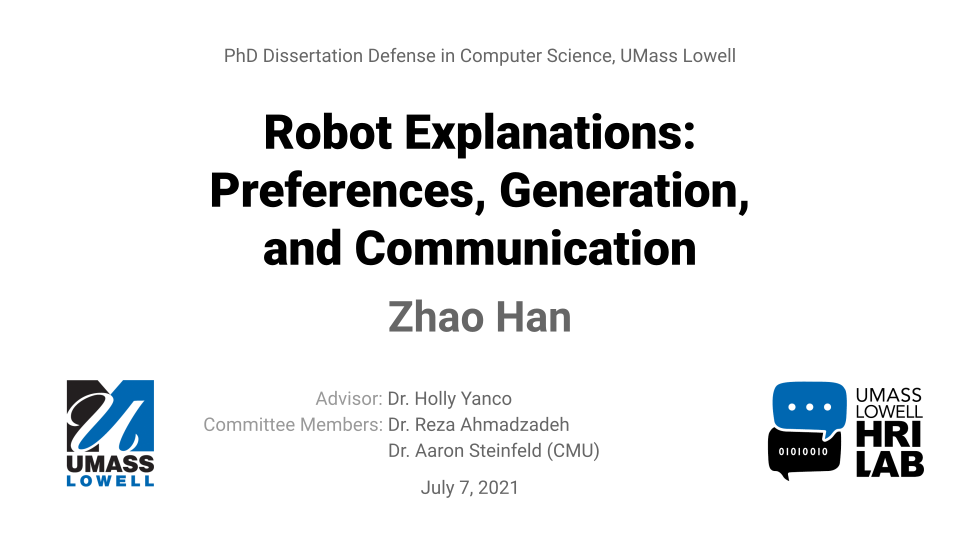
Robot Explanations: Preferences, Generation, and Communication

The Need for Verbal Robot Explanations and How People Would Like a Robot To Explain Itself

Design Guidelines for Human-Robot Interaction with Assistive Robot Manipulation Systems


Building The Foundation of Robot Explanation Generation Using Behavior Trees

Proceedings of the AI-HRI Symposium at AAAI-FSS 2020


Reasons People Want Explanations After Unrecoverable Pre-Handover Failures


The Effects of Proactive Release Behaviors During Human-Robot Handovers

Investigating Human-Robot Handover Release Behaviors

Delivering Scalable Frequent Pattern Mining for Non-Expert Data Miners


FIMaaS: Scalable Frequent Itemset Mining-as-a-Service on Cloud for Non-Expert Miners
Edge-based mining of frequent subgraphs from graph streams
Refereed Journals
Communicating Missing Causal Information to Explain a Robot’s Past Behavior
Best of Both Worlds? Combining Different Forms of Mixed Reality Deictic Gestures
The Need for Verbal Robot Explanations and How People Would Like a Robot To Explain Itself
Design Guidelines for Human-Robot Interaction with Assistive Robot Manipulation Systems
Building The Foundation of Robot Explanation Generation Using Behavior Trees
Refereed Conference Proceedings
The RUSH Checklist: A Standardized Framework for Reporting User Studies in Human-Robot Interaction
Anywhere Projected AR for Robot Communication: A Mid-Air Fog Screen-Robot System
Reactive or Proactive? How Robots Should Explain Failures
Towards Reproducible Language-Based HRI Experiments: Open-Sourcing a Generalized Experiment Project
Exploring the Naturalness of Cognitive Status Informed Referring Form Selection Models
Evaluating Cognitive Status-Informed Referring Form Selection for Human-Robot Interactions
Crossing Reality: Comparing Physical and Virtual Robot Deixis
Fresh Start: Encouraging Politeness in Wakeword-Driven Human-Robot Interaction
Givenness Hierarchy Informed Optimal Document Planning for Situated Human-Robot Interaction
Evaluating Referring Form Selection Models in Partially-Known Environments
Projecting Robot Navigation Paths: Hardware and Software for Projected AR
The Effects of Proactive Release Behaviors During Human-Robot Handovers
FIMaaS: Scalable Frequent Itemset Mining-as-a-Service on Cloud for Non-Expert Miners
Edge-based mining of frequent subgraphs from graph streams
Refereed Workshop Papers and Extended Abstracts
The Importance of Memory for Language-Capable Robots
Mixed-Reality Robot Behavior Replay: A System Implementation
Towards Formalizing HRI Data Collection Processes
Towards an Understanding of Physical vs Virtual Robot Appendage Design
“Why Didn’t I Do It?” A Study Design to Evaluate Robot Explanations
Causal Robot Communication Inspired by Observational Learning Insights
A Task Design for Studying Referring Behaviors for Linguistic HRI
Reasons People Want Explanations After Unrecoverable Pre-Handover Failures
Theses
Robot Explanations: Preferences, Generation, and Communication
Delivering Scalable Frequent Pattern Mining for Non-Expert Data Miners
Other Publications
Inclusive HRI II: Equity and Diversity in Design, Application, Methods, and Community
Proceedings of the AI-HRI Symposium at AAAI-FSS 2022
Proceedings of the AI-HRI Symposium at AAAI-FSS 2020
Investigating Human-Robot Handover Release Behaviors