
Contents
Abstract
As dental professionals face strenuous conditions and patients experience dissatisfaction or unsuccessful procedures, dental robots hold the promise to improve precision, speed, and satisfaction in dental care. However, there is a knowledge gap on patients’ and dentists’ expectations of robots in the realm of digital dentistry. As an exploratory study, we contribute an analysis of the implications of robotics in dental offices for patients and dentists. Given the constraints of busy and high-earning dentists, we were able to conduct an explorative study with six dentists, with a combined 86 years of practicing experience, and 12 patients in real-world dental offices. Results from dentists show that current benefits reside in treatment planning and instrument sterilization. With patients as their priority, dentists’ main concerns were a decrease in patient-doctor interactions and a lack of adaptability in unforeseen circumstances. Similarly, patients had concerns about possible malfunction and its impact on the quality of experience. Patients emphasized the benefits of improving procedures to produce the desired or lasting treatment. These findings contribute new knowledge and future directions to an interdisciplinary yet underexplored health domain in dentist-, patient-, or dentist-patient-robot interaction.
*All authors are with the RARE Lab, Bellini College of Artificial Intelligence, Cybersecurity and Computing, University of South Florida (USF), 4202 E. Fowler Avenue Tampa, FL 33620, USA zhaohan@usf.edu
†Ashley Herbert is with the Department of Medical Biology at USF.
I. Introduction
Robotics is revolutionizing how dentistry is taught and practiced as the world continues to transition to digital technologies. The majority of current work involving dental robots focuses on technical aspects of robot functions and how they benefit health outcomes [1, 2, 3, 4]. For example, robotics can improve the precision and success of cranio-maxillofacial surgeries with a six-degree-of-freedom surgical robot [5, 6].
However, there is a critical gap about how dental providers and patients feel about integrating robotics in the dental office. For example, a study revealed that a majority of dental students and dentists do not incorporate robotics into their practice, yet 84.5% agreed that they would be beneficial in improving procedural results [7]. Not knowing dentists’ or patients’ opinions on dental robots exacerbates the uncertainties about what the future of digital dentistry means for dental job security, dental education, and the quality of dental care. Without a clear understanding and resultant future directions, dental robots’ acceptance into dental care are at risk if they do not feel robots can improve their work or patient experience in the way they prefer.
To begin addressing the gap, our work connects dentist robot technology and expert opinions with two main contributions:
- through an exploratory interview and survey study, a quantitative and qualitative analysis of perspectives on dental robots from dentists and patients in real-world dental offices
- a list of emerging concerns, expectations, and opportunities to inform future research in dentist-, patient-, or dentist-patient-robot interaction.
II. Related Work
A. Robots in Healthcare
In a broader sense, Human-Robot Interaction (HRI) in healthcare has transitioned from simple teleoperation to complex collaborative paradigms. Central to this evolution is the concept of autonomy. According to the Levels of Autonomy in Surgical Robotics (LASR) framework [6], most FDA-cleared systems currently operate at Level 1 (Robot Assistance), yet there is a significant push toward Level 3 (Conditional Autonomy) in specialized domains. While research has historically focused on general surgery, similar challenges are emerging for dental robots. Beyond traditional haptic-guided procedures [8], there is increasing interest in integrating dental robots into broader clinical workflows, including diagnostic assistance—such as intraoral scanning and AI-assisted lesion detection—and automated clinical support tasks, to enhance procedural precision.
The success of these systems depends heavily on the Human-Robot Collaboration (HRC) model. Ait Ameur et al. [9] identify three critical components of healthcare HRC: professional-oriented tasks, patient-centric acceptability, and system-critical safety. For dental practitioners, a primary concern remains the potential erosion of the dentist-patient relationship and the adaptability of robots to unforeseen clinical complications, such as sudden patient movements or complex anatomical variations [10].
Trust is another key factor influencing the adoption of healthcare robots. The service Robot Acceptance Model (sRAM) [11] suggests that functional, emotional, and social factors collectively shape users’ willingness to interact with medical robots. Prior studies have shown that social robots can reduce patient anxiety and support clinical interactions in pediatric and geriatric care [12, 13]. However, trust in healthcare robots represents a complex moral and technical dependency that requires transparent interaction design to ensure safety and reliability [14, 15]. In clinical contexts such as dentistry, where patients may experience anxiety and vulnerability during procedures, trust becomes particularly important for the acceptance of robotic technologies.
Despite these advances, little empirical research has examined how these HRI principles apply to dental robotics, particularly from the perspectives of dentists and patients. Understanding these stakeholder perspectives is essential for designing dental robots that align with clinical workflows and patient expectations.
B. Robots in Dental Offices
Practical applications and transformative potential of dental robots in clinical environments are reshaping procedures from diagnosis to surgery. Existing research [16, 2, 3, 4] provides a taxonomy of systems tested across dental specialties, including endodontics, orthodontics, oral surgery, and restorative dentistry. Beyond surgery, emerging robotic applications in diagnostics—such as autonomous intraoral scanning and AI-driven lesion detection—are increasingly recognized for enhancing clinical decision-making [17].
Although dental robots have been studied through clinical trials, they are not yet widely available commercially, complicating implementation in daily practice [3, 18, 19]. Manual dental procedures are often laborious, costly, and subject to human error, which robotic systems may help mitigate [3, 20, 21, 19]. The physical limitations of clinicians, including restricted dexterity and difficulty visualizing certain angles, further motivate the use of dental robots. For example, robots can remove plaque and tartar from hard-to-reach areas and prepare gum lines with high precision [22, 23], supporting pre-operative procedures.
One such dental robot is Yomi, a computer-aided system with a robotic arm approved by the U.S. Food and Drug Administration (FDA) for pre-operative and intra-operative procedures [24]. Yomi can adjust to patient movement and assist in implant surgeries, representing a high level of autonomy in the dental operatory [6]. However, systems such as Yomi also raise questions about job security, patient acceptance, and compliance relevant to our study.
Besides Yomi, other work has focused on the design and engineering of robotic assistance for clinical procedures [2, 25]. For example, the Da Vinci surgical system [26] allows the clinician to retain control while the robot assists in precise positioning during complex surgeries [6]. Similar approaches appear in single-arm systems for cranio-maxillofacial (CMF) surgeries [2, 3, 25]. CMF procedures are often lengthy and technically demanding [27], and Burghart et al. [27] developed a 6-degrees-of-freedom robot to improve positional accuracy [27, 25]. In contrast to this engineering perspective, our work examines human perspectives on dental robots and what improvements may support their broader incorporation.
Yomi has also been discussed as a breakthrough in dental robotics [24, 28, 8]. Mergelmeyer, a practicing Doctor of Dental Surgery, suggests that Yomi’s real-time guidance and visualization are useful during surgery and may improve precision and patient care [24, 2, 20, 28]. He also reports two Yomi-assisted cases with no surgical or post-operative complications [24, 28, 8].
Previous literature [16] has claimed that dental robots, such as Yomi, reduce the “need for specialized training.” Our results challenge this belief through data from dentists and patients regarding procedural involvement. Relatedly, social robots such as Whisk have been explored to ease anxiety during treatment and reduce pediatric dental anxiety by serving as social mediators during procedures [29, 5, 12]. Such systems also promote relaxed states of mind and altruistic behaviors in children [12], suggesting that dental robots may support emotional regulation and patient comfort.
C. Understanding Expert Perspectives
Beyond outcomes of dental robots, we discuss literature on experts’ views of robots in their field and broader human perspectives on robotic roles. An analysis of space experts’ views on robotics highlights the importance of understanding robotics from the experts’ perspective. Space robots are shaped by technological considerations, operators’ acceptance of new technology, and sense of control [30]. Using NASA’s definition of autonomy, the authors interviewed five space robotics experts to examine autonomy decisions [30, 31]. Experts highlighted concerns including reliability, trust calibration, reduced situational awareness, and potential loss of operator skills [30, 28]. These findings emphasize the importance of considering human factors and operator perceptions when designing autonomous robotic systems [30]. This is particularly relevant to dental robotics, where clinical safety, trust, and human oversight are essential.
Robotics does not only affect direct users. Martinez et al. [32] considered public bystanders’ perspectives and studied opinions of food service robots designed to reduce dangerous or repetitive human tasks [32, 33]. This is relevant to digital dentistry because such systems may assist with repetitive preparation tasks while also shaping patient trust and acceptance of robotic assistance. Their findings show that trust changes over time: observing robot failure reduces trust, whereas repeated successful interactions increase it [32, 34, 33]. This suggests that acceptance of robotic systems may increase with successful exposure.
The literature above focuses on dental robots’ technical capabilities and human experiences with robotics in space and service settings. However, there is a critical gap in dental robotics research regarding the perspectives of dentists and patients, particularly on trust, acceptance, and human-robot interaction in clinical contexts. This work begins to address that gap through quantitative and qualitative analysis, including two Likert scale surveys and one inductive interview.
III. Method
A. Study Procedure, Questionnaires, and Interview
All participants received information on how their responses would be used and provided consent for participation and use of their survey responses. Dentists additionally consented to having their interview responses transcribed and anonymously quoted in publications. Before completing the survey, all participants read dental robot terminology and a brief overview with pictured examples of dental robots from [16] to ensure a shared understanding of the study topic.
The dentist interview used an inductive approach to encourage first-person responses and consisted of five question prompts on perceived advantages, disadvantages, human involvement, and future directions of dental robots. Interviews ranged from five to fifteen minutes.
The dentist survey [35] included questions about practicing years and dental specialty, with two binary questions on use of dental robots and dental job security, as well as two Likert-scale questions on the effectiveness of improving dental procedures and concerning-ness on robotics replacing dental workers. They were also asked to elaborate the ratings.
The patient survey [36] included seven Likert-scale questions on willingness to undergo a procedure involving a dental robot, trust of dental robotics to improve the quality of care, belief that a robot could completely replace dentists, comfort with robot-assisted dental procedures, the importance of understanding how robots will be used before procedures, the importance of personable conversations with dentists, preference in a fully human-operated procedure (1) or a fully robotic-assisted procedure (7), as well as an open-response question on concerns about robotic-assisted dentistry. Patient responses were analyzed alongside dentist data to identify directions for improving comfort and acceptance.
This study was approved by the Institutional Review Board at the authors’ institution.
B. Participant Recruitment and Demographics
Practicing dentists and patients were recruited from real dental offices in the U.S. states of Florida and Ohio, to explore different perspectives within real dental settings. Recruitment fliers for patient surveys were delivered in person to the front desk, who displayed them in the waiting room. Dentists’ surveys and interview registration were distributed electronically via email from Qualtrics.
TABLE I
About 86 Years of Practicing: Demographics of Dentists
| D1 | D2 | D3 | D4 | D5 | D6 | |
| Years Practicing | 10 | 19 | 40 | 5 | 8 | 4 |
| Dental Specialty | GD1 | GD1 | GD1 | OMFS2 | Pediatrics | GD1 |
1. GD: General Dentist. 2. OMFS: Oral Maxillofacial Surgeon.
Despite difficulties due to an extremely busy schedule and extremely high hourly salary, we were able to go to 20 dentist offices in person and recruit six practicing dentists with 86 years of practicing experience (Table I) across Florida and Ohio, including the cities of Tampa, St. Petersburg, St. Augustine, and Parmalee, and three (50%) proceeded to in-depth interviews. The average age was 40.8 years (SD = 9.42), ranging from 31 to 78. The gender distribution was predominantly male, with five respondents (83.33%) and one preferring not to disclose (16.67%). The selection spanned both urban and rural locations.
17 patients across various dentists’ offices in Florida completed the survey. However, five were excluded from the final analysis due to incomplete surveys, resulting in a sample of 12 participants. The average age of the participants was 26 years old (SD = 10.446), with a range from 19 to 54 years old. The sample included 8 females (66.67%) and 4 males (33.33%). The geographic spread of participants covered both urban and rural areas.
C. Data Analysis with Bayesian Approach
We used the Bayesian analysis framework, thanks to a number of benefits over the more common Frequentist approach. The Bayesian framework allows us to quantify evidence for and against hypotheses as data accumulate [37], as shown below:
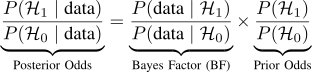
It uses the Bayes factor BF10, a ratio of evidence between the two competing hypotheses ℋ1 (alternative hypothesis) and ℋ0 (null hypothesis). For example, BF10 = 5 means that the data collected is five times more likely to occur under ℋ1 than ℋ0, thus supporting ℋ1. BF is more informative and intuitive to interpret than p-values.
Additionally, while the Frequentist approach needs power analysis to determine the sample size [38], in part because one cannot “peek” into the data to stop early or recruit more while sampling continues, this is not true for Bayesian analysis. Bayesian inference is not grounded in the central limit theorem and the Bayes factor and posterior probabilities are conditioned on the collected data, as seen from the equation above. Thus, experimenters can adopt a flexible recruitment plan until the evidence is compelling enough to confirm or reject hypotheses, or until resources are exhausted [39, 40, 41], which aligns well with the challenges of recruiting practicing dentists and real patients in dental offices. Indeed, as readers read our results below, we were able to see conclusive BF values. For details of the Bayesian method and its benefits, we refer readers to [37].
To better interpret BF , we use the widely accepted discrete classification scheme proposed by [42]. For evidence favoring ℋ1, Bayes factors BF10, are deemed “anecdotal” (non-conclusive) when BF ∈ (1,3], “moderate” when BF ∈ (3,10], “strong” when BF ∈ (10,30], “very strong” when BF ∈ (30,100], and “extreme” when BF ∈ (100,∞]. For data in favor of ℋ0, these thresholds are inverted: 1, 1/3 (0.333), 1/10 (0.1), 1/30 (0.033), 1/100 (0.01). In this case, we will discuss results in terms of BF01 (1/BF10) rather than BF10 for easier interpretability.
In free-response questions, words were analyzed to create themes through an inductive method. Qualitative analysis was conducted in NVivo 15.1 to assess open-response codes. A codebook with themes was created and reviewed by two researchers. To evaluate coding consistency, inter-rater reliability was assessed using Cohen’s Kappa. 10% randomly selected statements were independently coded by another researcher, yielding κ = 0.86 (R 4.4.2, irr package) , indicating a high level of agreement [43]. These themes were used to identify expert views on the benefits and limitations of robotics in dentistry, as well as refinements to increase comfort, acceptance, and address concerns from dentists and patients.
IV. Results and Discussion
We ran all Bayesian tests in an open-source statistics program, JASP 0.95.0 [44]. Bayesian multinomial proportional tests [45] were run on Likert-scale responses to compare expected proportions, 1/7. The questionnaires, raw responses, and Bayesian data analysis scripts are available on the Open Science Framework (OSF): https://osf.io/wu2hf/ and GitHub: https://github.com/TheRARELab/dentistry-data-analysis.
A. Patient Survey
For trust in improving care (M=4.167, SD=1.946), a BF01=13.333 suggests strong evidence against a difference in the trust level towards improving dental work. For the willingness to undergo a dental procedure involving robotics, it yielded strong evidence BF01 = 10 (M=4.167, SD=2.209).

Fig. 1. Patient disbeliefs about robots completely replacing dentists (BF10=10), how likely a dental robot will replace a dental worker.
As seen in Figure 1, the perception of reliability of digital dentistry suggests a low desire for robotics to completely replacing dental workers. No patients suggested that robotics could replace dentists, confirmed by extreme evidence BF10=134.487 (M=1.583, SD=0.669). Therefore, dental robots may not decrease job security and future dental technologies may prioritize assistive dental robots rather than the full capabilities of a dentist. For patient comfort (M=4.417, SD=2.466) during robotic-assisted procedures, a moderate evidence BF01=3.344 was calculated, representing moderate evidence against any differences in opinions on the comfort level of patients towards dental robots. This is an optimistic result in favor of dental robots because it means patients are not completely uncomfortable with dental robots in practice. Regarding robot autonomy, a moderate evidence BF01 = 6.711 was revealed (M=3.583, SD=1.881), favoring no differences in patients’ opinion.

Fig. 2. Patients highlight on importance of understanding robotics before their dental procedure; Education on Robotics Before Procedure (BF10 = 125.522). The distribution plot represents the number of patients who selected each response.
Figure 2 (M=5.75, SD=1.913) discloses that patients’ education about the dental robots is highly valued before the procedure is done. Extreme evidence BF10 = 125.522 indicates that the majority of patients believe that understanding and knowledge of dental robots is very important.

Fig. 3. Importance of personable conversations between patients and dentists. Moderate evidence favors no difference (BF01 = 3.344). The distribution plot represents the number of patients who selected each response.
For the importance of personal conversation with a dentist (Figure 3, M=4.917, SD=2.234), moderate evidence (BF01 = 3.344) favors no difference among the ratings.
Discussion: Collectively, the patient survey data suggest that patients maintain a neutral stance regarding their trust in and willingness to undergo procedures involving dental robots (BF01 ≥ 10). With extreme evidence on dental robot education (BF10 = 125.522), patient acceptance appears highly contingent on direct communication and education from the dentist prior to a procedure. Rather than relying on preconceived notions, patients may seek clinical reassurance to bridge the information gap regarding robotic assistance. These findings provide preliminary insights to the field. Additionally, responses for not replacing dentists (BF10=134.487) suggest that patients prioritize the dentist’s expertise and the human-centric nature of clinical encounters. Overall, the patients’ responses suggest that robotic systems may currently be most acceptable when positioned as assistive tools that augment, rather than substitute for, the clinician’s role.
B. Patient Open-Responses

Fig. 4. Number of entries per code found in the patient free response questions. Codes with the most responses increase reading down the x-axis of the graph, where response percentages include Improvements at 12, Concerns at 12, and Uncomfortable at 14.
As seen in Figure 4, the most talked about is in patients’ discomfort with dental robots, which revolved around “Anxious to think about automating” and “unsure of how developed.” This stems from the concept that patients desire education on digital dentistry in practice, as well as doctor interaction to ease emotional turmoil while in the dental chair. Similar themes were also seen in responses to the two patient questions: importance of understanding robotics before their dental procedure and importance of personal conversation with dentists.
Patients rarely answered that they thought a dental robot could replace any dental worker, with the majority defending the opposite answer, e.g., that “it cannot remove the dentist completely. The dentist has a certain skill set that I don’t believe a robot could replace”. Regarding the capabilities of current dental robots, the majority of patients believed that include non-operative tasks, e.g., diagnosis, sterilization, room preparation, patient history collection, and scanning/x-ray techniques. They stated that dental robots could “provide assistant to dentists with simple tasks.” Two patients suggested dental robots could be more involved in procedures performing to “make less harm to your skin and make minimal cuts” or aid in suturing. This is beneficial as it points some directions of digital dentistry within the comfort or expected zone for patients.
From patients’ responses, an improved dental robot would be one that assisted in a similar way to a dental assistant. Patients wrote that they believe dental robots are able to “provide assistance to dentists with simple tasks”. This may cause concern for dental assistants in terms of job security, as many patients believe that the job of the dental assistant is to minimize risks and speed up the procedure, and “either robot or human assistants, the same results occur”.
However, in terms of job security for dentists, the majority of patients wrote that a dentist could not be fully replaced. Patients wrote that “dentist takes into consideration my needs and concerns” and “communication with the doctor is very important”. They noted explanations such as “Still need to speak to a dentist to get preventative care and know my health” and “Dentists require a lot of knowledge and skill”. This shows an area for improvement in dental robots, from a patient perspective, would be to incorporate a “human touch” or quality conversations with someone who could hear their needs and concerns and care for them. However, some patients noted how going to the dentist can be a scary experience, which shows that robots out of dental offices may also help.
Out of the concerns, the most repeated one involved “malfunction could occur and harm me”, with the second most common concern being “need to be able to voice concerns to a human”. Another example of a patient response is the “inability to adapt procedure to individuals”. They mention the concern that they would not be comfortable with a dental robotic procedure because they need a “real person due to the ability to tailor care to the individual”. Based on the number of concerns involving robotic malfunction and corruption, patients do not believe current dental robots are adaptable to unforeseen or emergency circumstances. Patients brought up desired improvements to dental robots such as “understanding pain management” while still having the “dentist there and present throughout, I would feel safe and reassured”. One future improvement to robotics would be the ability for them to sense what might cause pain and how to reduce those effects for the patient anatomically. Another improvement would be to ensure that dental robots involves the oversight of dentists and allows dentists to be involved in the operation or diagnosis of the dental robot, as it is important to patients. This could involve the ability for the dentist to stop or adjust the robot in a moment’s notice. These insights can be taken into consideration so that patients can feel more willing and comfortable in the dental office.
The free responses also revealed the weight of doctor-patient interactions and how important they are in dental care. In Figure 4, there were a total of 11 responses coded to Dr Interaction. One representative example is “dentist provides personal advice to enhance my dental hygiene and care in a nice and professional manner,” and another is “I feel more comfortable when the dentist takes into consideration my needs and concerns”. Similar to the responses from the Likert data of Trust in Improving Care, patients value having human interaction when at the dentist for a procedure. This is important to consider in future dental technology as it could focus on speeding up certain tasks for the dentist, such as sterilization or pre-operative setup, so the dentist can spend more time interacting with the patient for patient satisfaction.
C. Dentist Survey
Although all experts dismissed job security concerns, showing that dentists are not concerned that dental robots will decrease their job security, the Bayesian analysis, however, revealed anecdotal evidence against a difference in the ratings (BF01 = 1.649), leaving whether dentists believe dental robots could replace them inconclusive.
On this front, the Bayesian analysis revealed moderate evidence (BF01 = 3.299) against any difference in the responses.
D. Dentist Interview and Open-Responses

Fig. 5. Dentist Interview Codes. Number of entries per code from the four inductive interviews with dentists.
Benefits of dental robots were the main code across all four interviews, as shown in Figure 5. Within these codes, the primary benefits included were sterilization, cavity retrieval, maintaining a dry field during procedures, diagnostics for an instant second opinion, and dispersing the load of dental assistants and providers so that more time can be spent with the patient and on the procedure at hand. Dentists generally valued assistive techniques rather than full autonomy. These techniques aimed at non-procedural tasks, meaning the robot would not interact with the patient. Dentist 1 references that they would benefit from robot systems that “provide the materials or the suction”, which is similar to the jobs of a dental assistant. Despite this, dentist 1 confirmed in the interview that it would be a hurdle for them to use a robot that does not respond like a person and that they would be “more comfortable with a human being rather than a machine”. This adds positive confirmation to job security as the results point to dental robots not being believed to replace dental workers. A robot that could aid in keeping a “dry, sterile environment” around the dentist or speed up sterilization techniques is desired by dentists, as dentist 2 and 3 spoke on these benefits.
Dentist 2 explained how the main benefit, and current focus, of digital dentistry is in diagnostics. They reference the company Pearl, an example of intelligent digital dentistry, and how it advertises as an instant second opinion. Dentist 3 confirms the interest in technology that can diagnose by stating that current digital dentistry can “determine different cavities and recognition of depth of pockets”. This points the future direction of dental robots towards diagnostics. Furthermore, dentist 2 referred to diagnostic as a great place for dental robots to start because it confirms or denies a dentist’s diagnosis and “then that’s like having another doctor on staff”. Second opinions can provide patients with the confidence that their dentist has the knowledge and skill to properly treat them. Dentist 4 spoke about the benefit of robotics in maximizing efficiency behind the scenes so that there can be more time spent with patients and on the procedure. This can benefit the patient-physician relationship, which has been proven by patient data to be highly valued.
This data on benefits revealed that dentists would like the focus of robotics to be on assisting their job rather than completing their job. They mention the possible benefits that dental robots should not replace, but be used in cases where staff members may need help or are unable to work. There are a lot of possibilities in implementing robotic dentistry into practice because, as dentist 3 mentioned, “it never gets sick and never takes a day off. You just have to do the maintenance”. For future robotic development, this might be one of the selling points for dental offices of their technology. Future focus on dental robots should include the ability to maintain sterile environments, dispersing pre-operative workloads, and diagnosing oral health problems to increase accessibility of dental care.
Concerns about dental robots were frequently noted by dentists as seen in Figure 5. The top two concerns were that robotics in procedures are not adaptable and will decrease patient-physician relationships, harming the practice of dentistry. Dentist 1 referred to how the behavior of patients can be unpredictable. Giving the example of a sneeze, they explained that such a movement during a simple filling can alter the procedure and that a robot would need to be adaptable enough to respond appropriately while prioritizing patient safety and completing the procedure correctly. “How it will handle unforeseen circumstances” is a major concern for all four dentists interviewed. This concern points to a direction of future improvement in the ability for a robot to respond appropriately in an unexpected event.
All dentists mentioned robot malfunction in their interview, making it a major focus for the future direction of dental robots. For example, dentist 3 said an important feature of the robot would be to “ensure it targets the areas being operated on”. In other words, ensuring the robot doesn’t go off track of a planned pathway when operating on a patient. Dentist 2 discussed how “as we lean into letting robots assist us more, we can get lazy and let them, and then if you’re not paying attention, things can start to become skewed”. Strengthening this viewpoint, dentist 4 discussed “relying on it and not learning the critical elements of how to do the basics of our job duty. Once you rely on technology too much, you have to be prepared when that may not work”. The takeaway is that the robot needs extensive safety features, and the dental staff needs to stay up to date on being able to manually run a dental office in case of the robot fails. Dentist 2 discussed a concern of people with “bad intentions that could program them, doing things like shaving things in favor of denying an insurance”. These concerns are something to consider in dental technology, as they suggest there should be some sort of objective safety lock on the robotics so they can not be programmed for unsafe or illegal practice behaviors.
Dentist 2 and 4 emphasized the importance of their concern that robotics can decrease patient-physician interactions. For instance, dentist 4 said a primary reason they dislike the idea of dental robots during a procedure would be because “it would take away the element of the patient-doctor relationship if it was too involved with patient care”. Similarly, dentist 2 confirmed, “I’m a people person, so I don’t like the idea that robots can replace people’s jobs”. These dentists emphasized that a large part of dentistry is in patient care, and if both parties are not satisfied, then their profession suffers, suggesting that robotics needs to be satisfactory for both the dentists operating them and the patients being operated on.
For perceived robot capabilities, they differ from benefits in that they describe what robots can perform rather than the outcomes they produce. For instance, dentist 1 referred to “systematic optimization of the procedure”. This suggests that dental robots could support treatment (e.g., extractions or restorations), assist patient care similar to PwD robotics, or aid planning through CAD/CAM technologies discussed in the literature review. Advancing such systems may improve their accessibility in dental practice, as these capabilities are considered comfortable by dentists. Likewise, dentist 2 highlighted “guiding surgeries… for implant placement,” while dentist 3 noted that “Digital dentistry is already being used with radiography and applications that determine different cavities and recognition of depth of pockets”. These responses suggest that future systems could be customized to dentists’ common procedures. Dentist 4 added, “I think retraction… with a suction would be ideal”, indicating a need for assistive tools with flexible, multi-plane motion. These capabilities reflect dentists’ comfort with robot involvement. Incorporating these suggestions into future design may improve adoption in clinical practice.
E. Overarching Takeaways
The synthesized data provide preliminary insights into the perceived benefits and concerns of dentists and patients regarding dental robots. Consistency between qualitative themes and Likert-scale patterns suggests alignment across methods and offers guidance for refining robotic systems to better fit clinical and human needs. A central finding is the shared concern that dental robots could diminish patient-physician interactions. Both groups emphasized that dentistry remains a high-touch profession where patient education and emotional rapport are essential. At the same time, dentists noted that delegating non-procedural tasks such as sterilization and diagnostic preprocessing to robots may allow more time for patient-centered care. For future development, dentists prioritized system adaptability, especially the ability to manage unforeseen clinical events or sudden patient movements. This aligns with patient demand for safety mechanisms and human oversight during procedures.
V. Limitations
To the best of our knowledge, this work is among the first to a largely unexplored intersection at healthcare setting in dentistry and robotics, surfacing stakeholder perspectives that are not usually documented. We understand that there are still several limitations.
First, although the dentists we recruited collectively have about 86 years of practice and the use of Bayesian data analysis approach provided evidence as data accumulates, a limitation of this work is the modest sample size, despite our best effort, and geographic concentration in the U.S. states of Florida and Ohio. We had a < 20% response rate, even though the first author interned at a dentist’s office and recruited and reminded participants over eight months, after which our time and brainpower resources were exhausted: her graduation. Researchers with more resources and funding might recruit more dentists in more locations across a longer timeline. As an exploratory study, the findings in this work can serve as a solid foundation for follow-up, larger-scale, and confirmatory studies.
Second, dental robots are a broad category. As we analyze the data, we noticed that dentists for special populations, such as children or social robots, e.g., helping families with healthy teeth, have been largely left out. Future work should investigate these areas more.
Thirdly, as we analyze the data, the dental assistants emerged as one important category of stakeholders. Future work should recruit them to particularly study, e.g., job security, benefits or concerns on dentistry robots.
Fourth, similarly, we also discovered many specific procedures, e.g., extractions or restorations, cavity or implant procedures, or root canal. Different dental robots may specialize in one or a subset of procedures. So, taking into account the kind of procedure as a factor during quantitative data analysis or conducting scoped qualitative research can offer us more insights into the specific procedural or operational context.
VI. Conclusion
In this work, we explored the perspectives of dentists and patients to guide future directions for the evolving research on dental robots. We identified through literature and experts that the current benefit of robotic systems lies in increasing procedural success when assisting the dentist, while the primary concern remains system adaptability. Experts advocate for a shift toward dental robots aiding in diagnostics, maintaining sterile fields, and adapting to the dynamic needs of both patients and clinicians. Patients, conversely, desire robotic assistance that preserves patient-physician interactions and prioritizes both education and safety. Overall, these findings provide preliminary insights suggesting that future developments in robotic dentistry should focus on procedural adaptability, integrated patient education, and clinician-led oversight mechanisms that ensure the dentist retains ultimate control over the autonomous system to protect the doctor-patient relationship.
References
[1] P. Dario, E. Guglielmelli, B. Allotta, and M. Carrozza, “Robotics for medical applications,” IEEE Robotics & Automation Magazine, vol. 3, no. 3, pp. 44–56, 1996.
[2] S. Yang, J. Chen, A. Li, K. Deng, P. Li, and S. Xu, “Accuracy of autonomous robotic surgery for single-tooth implant placement: A case series,” Journal of Dentistry, vol. 120, p. 104451, 2023.
[3] T. C. van Riet, K. T. C. J. Sem, J.-P. T. Ho, R. Spijker, J. Kober, and J. de Lange, “Robot technology in dentistry, part two of a systematic review: an overview of initiatives,” Dental Research Journal, vol. XX, no. X, pp. XXX–XXX, 2021. [Online]. Available: https://doi.org/10.1016/j.dental.2021.06.002
[4] P. R. Kumar, K. V. Ravindranath, V. Srilatha, M. A. Alobaoid, M. M. Kulkarni, T. Mathew, and H. D. Tiwari, “Analysis of advances in research trends in robotic and digital dentistry: An original research,” Journal of Pharmacy & Bioallied Sciences, vol. 14, no. Suppl 1, pp. S185–S187, Jul 2022, epub 2022 Jul 13.
[5] M. Ghafurian, J. Hoey, and K. Dautenhahn, “Social robots for the care of persons with dementia: A systematic review,” J. Hum.-Robot Interact., vol. 10, no. 4, Sep. 2021. [Online]. Available: https://doi.org/10.1145/3469653
[6] A. Lee, T. S. Baker, J. B. Bederson, and B. I. Rapoport, “Levels of autonomy in fda-cleared surgical robots: A systematic review,” npj Digital Medicine, vol. 7, no. 1, p. 103, 2024.
[7] H. Abouzeid, S. Chaturvedi, K. Abdelaziz, F. Alzahrani, A. AlQarni, and N. Alqahtani, “Role of robotics and artificial intelligence in oral health and preventive dentistry – knowledge, perception and attitude of dentists,” Oral Health & Preventive Dentistry, vol. 19, pp. 353–363, Jul 2021.
[8] A. Isufi, T. Y. Hsu, and S. Chogle, “Robot-assisted and haptic-guided endodontic surgery: A case report,” Journal of Endodontics, vol. 50, no. 4, pp. 533–539.e1, Apr 2024, epub 2024 Jan 26.
[9] M. A. Ait Ameur, E. Yang, and Y.-P. Zhang, “Human-robot collaboration in healthcare: A comprehensive review of key components, applications, and future research,” IEEE Transactions on Medical Robotics and Bionics, 2025, early access.
[10] J. Leoste, K. Lubi, K. Marmor, and K. Kangur, “Evaluating social assistive robots in clinical nursing care: Mixed method pilot study on health care workers’ perceptions and adoption,” JMIR Nursing, vol. 8, p. e70305, 2025.
[11] W. M. Lim, K. M. Jasim, and A. Malathi, “Service robots in healthcare: Toward a healthcare service robot acceptance model (sram),” Technology in Society, vol. 82, p. 102932, 2025.
[12] Y. Kasımoğlu, S. Kocaaydın, and S. Batu, “The impact of a humanoid robot on children’s dental anxiety, behavior and salivary amylase levels: A randomized clinical trial,” The Journal of Pediatric Research, vol. 10, no. 2, pp. 132–141, 2023.
[13] K. Kabacińska, K. A. Teng, and J. M. Robillard, “Social robot interactions in a pediatric hospital setting: Perspectives of children, parents, and healthcare providers,” Multimodal Technologies and Interaction, vol. 9, no. 2, p. 14, 2025.
[14] M. Kropf, “Trust and care robots: Philosophical considerations, ethical challenges, and viable options,” Intelligent Service Robotics, vol. 18, pp. 339–350, 2025.
[15] I. Giorgi, M. Gianni, A. Minutolo, M. Palomino, F. Tirotto, O. Hagen, G. L. Masala, and M. Esposito, “I am robot, your health adviser for older adults: Do you trust my advice?” International Journal of Social Robotics, vol. 17, pp. 883–902, 2025.
[16] Z. Xia, F. Ahmad, H. Deng, L. Jiang, W. Qin, Q. Zhao, and J. Xiong, “Robotics application in dentistry: A review,” IEEE Transactions on Medical Robotics and Bionics, vol. 6, no. 3, pp. 851–867, 2024.
[17] G. L. Masala and I. Giorgi, “Artificial intelligence and assistive robotics in healthcare services: Applications in silver care,” International Journal of Environmental Research and Public Health, vol. 22, p. 781, 2025.
[18] D. Silvera-Tawil, “Robotics in healthcare: A survey,” SN Computer Science, vol. 5, p. 189, 2024, published January 11, 2024. [Online]. Available: https://doi.org/10.1007/s42979-023-02551-0
[19] A. A. Morgan, J. Abdi, M. A. Q. Syed et al., “Robots in healthcare: a scoping review,” Current Robotics Reports, vol. 3, pp. 271–280, Dec. 2022, accepted: 19 September 2022; Published: 22 October 2022.
[Online]. Available: https://doi.org/10.1007/s43154-022-00095-4
[20] T. Otani, A. J. Raigrodski, L. Mancl, I. Kanuma, and J. Rosen, “In vitro evaluation of accuracy and precision of automated robotic tooth preparation system for porcelain laminate veneers,” The Journal of Prosthetic Dentistry, vol. 113, no. 5, pp. 523–530, 2015. [Online]. Available: https://doi.org/10.1016/j.prosdent.2015.02.021
[21] K. Shamaei, Y. Che, A. Murali, S. Sen, S. Patil, K. Goldberg, and A. M. Okamura, “A paced shared-control teleoperated architecture for supervised automation of multilateral surgical tasks,” in 2015 IEEE/RSJ International Conference on Intelligent Robots and Systems (IROS), 2015, pp. 1434–1439.
[22] Z. Y. W. Qin, “Current research and application situation of robot in stomatology,” Journal of International Stomatology, vol. 45, no. 5, pp. 615–620, 2018.
[23] G. Sakaeda, A. Takanishi, and H. Ishii, “Development of automatic teeth cleaning robot with maltipule motion of brushes,” in 2021 IEEE/ASME International Conference on Advanced Intelligent Mechatronics (AIM), 2021, pp. 81–85.
[24] J. Mergelmeyer, “Dental implant surgeries with simultaneous sinus augmentation utilizing yomi robotics,” www.occore.com/files/2022/12/drmerg.pdf, 2022, center for Oral Reconstruction and Education. [Online]. Available: https://www.occore.com/files/2022/12/drmerg.pdf
[25] Q. Zou, B.-J. Yi, and Y. Shi, “Mechanical design and analysis of a novel 6-dof hybrid robot with large orientation workspace for dental application,” IEEE Access, vol. 12, pp. 150 824–150 843, 2024.
[26] K. Tae, “Transoral robotic thyroidectomy using the da vinci single-port surgical system,” Gland Surgery, vol. 9, no. 3, pp. 614–616, 2020. [Online]. Available: https://doi.org/10.21037/gs.2020.03.37
[27] C. Burghart, J. Keitel, S. Hassfeld, U. Rembold, and H. Woern, “Robot controlled osteotomy in craniofacial surgery,” in First International Workshop on Haptic Devices in Medical Applications Proceedings. Citeseer, Jun 1999, pp. 12–22.
[28] D. Mitroi and T. G. Wiedemann, “Robotically assisted implantology – a systematic review from a young dental professional’s perspective: I have no fear, my dental robot is near!” Journal of Clinical Medical Research, vol. 5, no. 1, pp. 1–6, 2024. [Online]. Available: https://athenaeumpub.com/journal-of-clinical-medical-research/
[29] S. Yin, B. Gao, R. Zhang, J. Lin, Y. Shin, Y. Guo, and H. Mi, “Whisk: Inducing altruistic behavior to relieve child dental anxiety,” in Proceedings of the 2025 ACM/IEEE International Conference on Human-Robot Interaction, ser. HRI ’25. IEEE Press, 2025, p. 1741–1745.
[30] C. Smith, T. Mott, and T. Williams, “Robot, take the joystick: Understanding space robotics experts’ views on autonomy,” 06 2024.
[31] J. M. Beer, A. D. Fisk, and W. A. Rogers, “Toward a framework for levels of robot autonomy in human-robot interaction,” Journal of Human-Robot Interaction, vol. 3, no. 2, pp. 74–99, 2014. [Online]. Available: https://doi.org/10.5898/JHRI.3.2.Beer
[32] J. E. Martinez, D. VanLeeuwen, B. B. Stringam, and M. R. Fraune, “Hey?! what did you think about that robot? groups polarize users’ acceptance and trust of food delivery robots,” in Proceedings of the 2023 ACM/IEEE International Conference on Human-Robot Interaction, ser. HRI ’23. New York, NY, USA: Association for Computing Machinery, 2023, p. 417–427.
[33] M. Hossain, “Autonomous delivery robots: A literature review,” IEEE Engineering Management Review, vol. 51, no. 4, pp. 77–89, 2023.
[34] S. Nahavandi, “Trusted autonomy between humans and robots: Toward human-on-the-loop in robotics and autonomous systems,” IEEE Systems, Man, and Cybernetics Magazine, vol. 3, no. 1, pp. 10–17, 2017.
[35] “dentist survey.” [Online]. Available: https://osf.io/wu2hf/files/k3u8h
[36] “patient survey.” [Online]. Available: https://osf.io/xb47m
[37] A. Etz and J. Vandekerckhove, “Introduction to bayesian inference for psychology,” Psychonomic Bulletin & Review, vol. 25, pp. 5–34, 2018.
[Online]. Available: https://doi.org/10.3758/s13423-017-1262-3
[38] M. E. Bartlett, C. Edmunds, T. Belpaeme, and S. Thill, “Have i got the power? analysing and reporting statistical power in hri,” ACM Transactions on Human-Robot Interaction (THRI), vol. 11, no. 2, pp. 1–16, 2022.
[39] J. O. Berger, “Statistical decision theory and bayesian analysis,” Statistical Decision Theory and Bayesian Analysis,, 1985.
[40] J. N. Rouder, “Optional stopping: No problem for bayesians,” Psychonomic bulletin & review, vol. 21, no. 2, pp. 301–308, 2014.
[41] E.-J. Wagenmakers, “A practical solution to the pervasive problems of p values,” Psychonomic bulletin & review, vol. 14, no. 5, pp. 779–804, 2007.
[42] M. D. Lee and E.-J. Wagenmakers, Bayesian cognitive modeling: A practical course. Cambridge university press, 2014.
[43] G. G. K. Landis J. Richard, “The measurement of observer agreement for categorical data,” Biometrics, vol. 33, pp. 159–174, 1977. [Online]. Available: https://www.jstor.org/stable/2529310
[44] JASP Team, JASP (Version 0.95.0) [Computer software]. [Online]. Available: https://jasp-stats.org/
[45] I. J. Good, “A bayesian significance test for multinomial distributions,” Journal of the Royal Statistical Society, vol. 29, no. 3, pp. 399–431, 1967.