
During my time in the lab, I worked on an ASAP development pipeline on a Windows machine using WSL2 Ubuntu 22.04, VS Code Remote WSL, and Conda, which allowed me to run the Linux-first IsaacGym and HumanoidVerse workflow reliably. I extracted and installed IsaacGym Preview 4 in the active conda environment, validated the installation by running IsaacGym example scripts, and successfully executed the ASAP smoke test training command using simulator=isaacgym with headless=True. In parallel, I began a structured codebase walkthrough focused on humanoidverse/train_agent.py and the Hydra configuration system under humanoidverse/config, mapping how simulator, robot, reward, observation, and terrain settings connect to the training pipeline. I also resolved environment setup and permissions issues across Windows and WSL, helping establish a stable and reproducible foundation for future ASAP experimentation and debugging.
I am very thankful for the opportunity to learn from the professor and mentors within the lab. Looking forward to using the experience I gained here to further shape my future academic work and professional growth.
— 3/1/2026
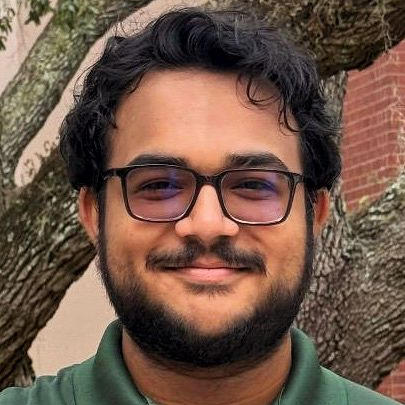
I’m a Junior Computer Science student at the University of South Florida with a full-stack foundation anchored in C++, Python, C#, and Java. Through coursework in data structures, algorithms, and artificial intelligence, I’ve developed strong skills in computational problem-solving and systems design. My technical skills lie in modern frameworks, including ASP.NET Core, Flask, and React, allowing me to develop scalable solutions such as a Dockerized RSA cryptography platform, a C++ virtual machine, and data-driven applications that utilize tools such as AWS, TensorFlow, and FAISS. Alongside software engineering and development, I also serve as a Resident Assistant at USF.
At the RARE Lab, my research interests center on augmented reality and humanoid learning. I’m excited by how AR and mixed-reality interfaces can make complex robot behavior more transparent and intuitive to humans, especially when working with humanoid platforms that move and learn in ways we recognize. I want to explore learning algorithms that help humanoid robots adapt to people in real time, using vision, motion, and feedback, to build systems that can teach, assist, and collaborate in everyday spaces.
— 12/2/2026
